Since BC tightened its short-term rental rules, the most common question we hear from Whistler owners is some version of the same thing: what am I actually allowed to do with my place? The confusion is reasonable. Three separate systems sit on top of each other here, they use different words for the same property, and the one most people fixate on, the number of nights, is not the one that usually decides the answer.
This guide maps the three layers in plain language, shows where the lines actually fall, and points you to the one office that can confirm your specific property. It is general information, not legal advice, and the zoning question in particular is property-specific, so treat this as orientation before you check the details that apply to your address.
Three rule sets, one property
When you rent out a home in the Sea-to-Sky corridor, up to three different rule sets can apply at once. They were written by different levels of government, for different reasons, and they do not line up neatly. Here they are, in the order most owners run into them.
The Short-Term Rental Accommodations Act
The provincial law that defines a short-term rental as accommodation offered for less than 90 consecutive days. It brought in mandatory provincial registration and, in many BC communities, a principal-residence requirement. Whistler is exempt from that principal-residence rule, but the registration and platform rules still reach here.
The Residential Tenancy Act
The law that governs genuine tenancies: leases, deposits, rent increases, notice, and dispute resolution. It does not apply to accommodation occupied as vacation or travel. It does apply when someone is renting a place to live in, which is the world a long-term or seasonal manager works in.
Whistler zoning
The Resort Municipality of Whistler controls whether a property can be used for nightly tourist accommodation at all, through zoning. In Whistler this is usually the binding constraint, more so than the provincial rules. Your parcel's zoning decides what is on the table before either provincial layer matters.
The rest of this guide takes them one at a time, then puts them back together so you can see which bucket your own property falls into.
Layer one: the 90-day line
The provincial Short-Term Rental Accommodations Act draws its line at duration. Accommodation offered for less than 90 consecutive days is a short-term rental in the eyes of the Act. Stays of 90 days or more sit outside it, and fall to the Residential Tenancy Act instead.
That single number does a lot of work. A booking of 88 nights is inside the short-term framework. A lease of 90 days or more is outside it. For owners who want nothing to do with the registry, platform rules, and nightly turnover, the 90-day mark is the clean side of the line.
Since May 2025, short-term rental hosts in BC must register with the provincial registry and display the number on their listings. Whistler's exemption from the principal-residence rule does not exempt a host from registration.
One point that trips people up: Whistler being exempt from the principal-residence requirement does not mean Whistler is exempt from the Act. It means a property that is not your principal residence can still be used for nightly rental where local zoning allows it. The provincial registration and platform-listing rules still apply.
Layer two: what actually makes it a tenancy
Here is where the night count stops being the whole story. The Residential Tenancy Act does not apply to accommodation occupied as vacation or travel accommodation. It does apply to genuine tenancies. The difference is not furnished versus unfurnished, and it is not purely about duration. It is about whether the arrangement has the marks of a tenancy.
The Province points to three factors: whether the rental is for a term, whether the occupant has exclusive possession of the unit, and whether the place is the occupant's residence rather than a holiday. When those are present, the Residential Tenancy Act governs, even if the place came furnished.
There is a defined rental period
A fixed end date, or an ongoing month-to-month arrangement, rather than a few nights booked for a trip.
The unit is theirs while they are there
The occupant has the place to themselves, not a hotel-style room with housekeeping and shared control.
They are living there, not vacationing
The unit functions as their home for the period, which is the heart of what separates a tenancy from travel accommodation.
The Province's own example makes it concrete: a winter chalet rented for a fixed term of six months is a tenancy under the Residential Tenancy Act. That is a furnished mountain property, rented seasonally, and it is squarely a tenancy, because it is for a term, with exclusive possession, as a residence.
A 30 to 89 day stay sits below the provincial 90-day line, yet a genuine fixed-term residential tenancy in that range is still governed by the Residential Tenancy Act, not the short-term rules. Purpose decides it. If there is ever a dispute about which applies, the Residential Tenancy Branch decides whether a tenancy exists.
Layer three: zoning is the real gate
The provincial layers tell you which rule book applies. Whistler zoning tells you whether nightly rental is even on the table. In most of Whistler, this is the constraint that actually binds. The municipality sorts properties into a few broad categories.
Most Whistler neighbourhoods
Alpine Meadows, Whistler Cay, Emerald, Bayshores, and similar. The place can be a home, a second home, or a long-term or seasonal rental of one month or more. Nightly tourist rental is not permitted at any length.
The flexible category
Standard condos and townhomes in the Village, Benchlands, and Creekside. The owner can live in it full-time, rent it long-term or monthly, or rent it nightly, and can usually choose their own manager. Long-term tenancies work here.
The units you buy inside the hotels
Units in the larger hotels, such as the Four Seasons, Westin, and Pan Pacific. Owner use is capped at about 56 days a year, and the rest of the time the unit must sit in the hotel's rental pool, rented nightly. These are generally not available for an independent long-term tenancy.
This is the layer worth checking first, because it can rule out an option before the provincial rules even come into play. For long-term management, residential and Phase 1 are the worlds where the work is: both allow a tenancy of a month or more. Phase 2 condo-hotel units are the common exception, because the hotel's rental pool controls them, so a unit bought inside a hotel generally cannot be set up as an independent long-term rental. Zoning and the covenant on title are specific to your parcel, so the only reliable way to know is to look it up.
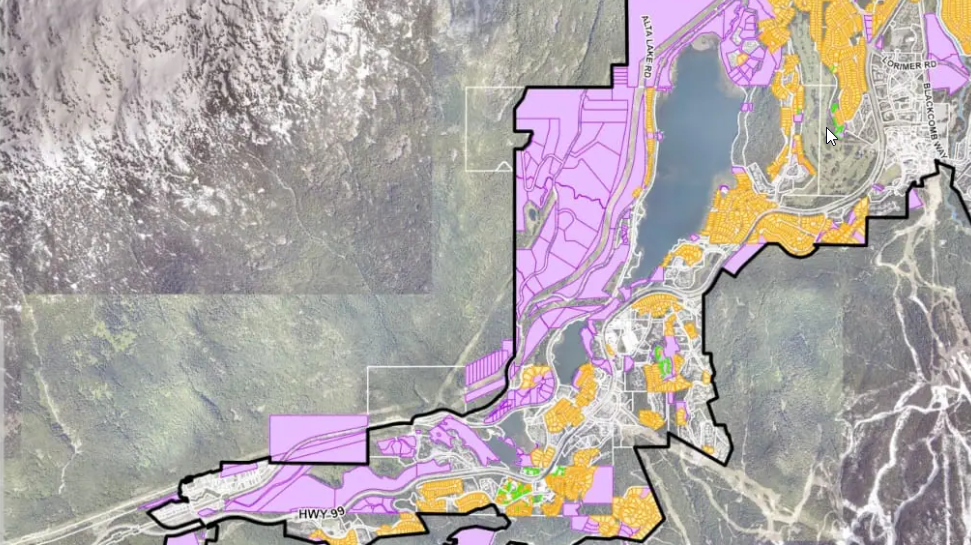
You can look up your parcel on the Resort Municipality of Whistler's online GIS mapping system, then confirm with RMOW. Confirming this zoning fit for a long-term tenancy is also part of how we onboard a property, so it is not on you alone. Zoning, not assumption, decides what is permitted.
So, which one is my rental?
Put the layers together and most Whistler properties land in one of three buckets. The table below is a general orientation, not a ruling on your specific unit. Your zoning and your intended use are what place you.
If your property is residential-zoned, which covers most Whistler neighbourhoods outside the tourist core, the right-hand column is your world: a long-term or seasonal tenancy under the Residential Tenancy Act. That is also exactly the work a licensed rental manager is set up to handle.
Where we fit, and where we don't
We are a licensed rental property manager operating with RE/MAX Sea to Sky, and our work lives entirely in the tenancy column. We are clear about the edges of that, because the lines in this guide are the same lines that define our scope.
What we do
- Manage long-term and seasonal fixed-term rentals of 30 days or more under the Residential Tenancy Act, furnished or unfurnished.
- Confirm the property is zoned for the long-term or seasonal tenancy we would manage, as part of onboarding.
- Handle tenant placement, written tenancy agreements, condition inspections, deposits, and rent in line with the Act, and explain the rules that apply.
- Act as your local point of contact in the corridor, whether you are down the road or out of the country.
What we don't do
- Run nightly or vacation short-term rentals, or list properties on nightly platforms.
- Issue formal zoning rulings, or sign off on whether a property qualifies for nightly short-term rental. That determination rests with the Resort Municipality of Whistler.
- Act as your lawyer or accountant. We apply and explain the tenancy rules that govern your rental, but formal legal opinions and tax advice come from a licensed professional.
So if you have read this far and landed in the tenancy column, that is the conversation we are built for. And if you are still not sure which bucket you are in, the first move is the same either way: confirm your zoning, then decide your use.
Common questions
Is a 30-day rental a short-term rental in BC?
Under the provincial Short-Term Rental Accommodations Act, a short-term rental is accommodation for less than 90 consecutive days, so a 30-day stay sits below that line. But which rules actually apply depends on how the place is used. If it is occupied as vacation or travel accommodation, the short-term rules apply. If it is a genuine fixed-term residential tenancy, with a term, exclusive possession, and the place used as a residence, the Residential Tenancy Act governs instead. In Whistler, zoning also decides whether nightly rental is allowed at all.
Does the Residential Tenancy Act apply to a furnished seasonal rental?
It can. Furnishing does not decide it. The Act does not apply to vacation or travel accommodation, but it generally does apply when the rental is for a term, the occupant has exclusive possession, and the place is their residence. The Province's own example is a winter chalet rented for a fixed term of six months, which is a tenancy under the Act.
Is Whistler exempt from BC's short-term rental rules?
Whistler is exempt from the provincial principal-residence requirement because it is treated as a mountain resort community, so a non-principal residence can still be used for nightly rental where local rules allow. Provincial registration and platform rules still apply, and the binding constraint in Whistler is usually municipal zoning. Confirm current status with the Province and RMOW.
Can I rent my Whistler home long-term if it is zoned residential?
Generally yes. Residential zoning allows long-term and seasonal residential tenancies. What it does not allow is tourist or nightly accommodation, which is restricted to properties zoned for it. Check your property's zoning on RMOW's mapping system before you advertise.
Can I rent out a unit I bought inside a Whistler hotel long-term?
Usually not. Units bought inside the larger hotels carry a Phase 2 covenant: owner use is capped at about 56 days a year, and the rest of the time the unit must stay in the hotel's integrated rental pool, rented nightly through the in-house agency. That pool requirement generally rules out an independent long-term tenancy. Phase 1 condos and townhomes, and ordinary residential properties, are the ones that can be rented long-term. Check the covenant on your title to confirm which you have.
How do I find out my Whistler property's zoning?
Use the Resort Municipality of Whistler's online GIS mapping system to look up your parcel, then contact RMOW to confirm. Zoning is property-specific, and it decides whether nightly short-term rental is permitted. Once the use is clear, a licensed manager can help you set up a compliant long-term or seasonal tenancy.